

The storm hits. The glass breaks. The metal buckles.
You have 500 units on the lot. Every single one is dimpled like a golf ball. Your first instinct is to call the guy down the street. The local body shop you’ve used for fender benders for ten years. You think loyalty matters. You think proximity equals speed.
You’re wrong.
In a catastrophe event, loyalty to a local generalist is a liability. It’s a bottleneck that will cost you months of floorplan interest and thousands in lost sales.
No more excuses. Just results.
The Local Shop Trap
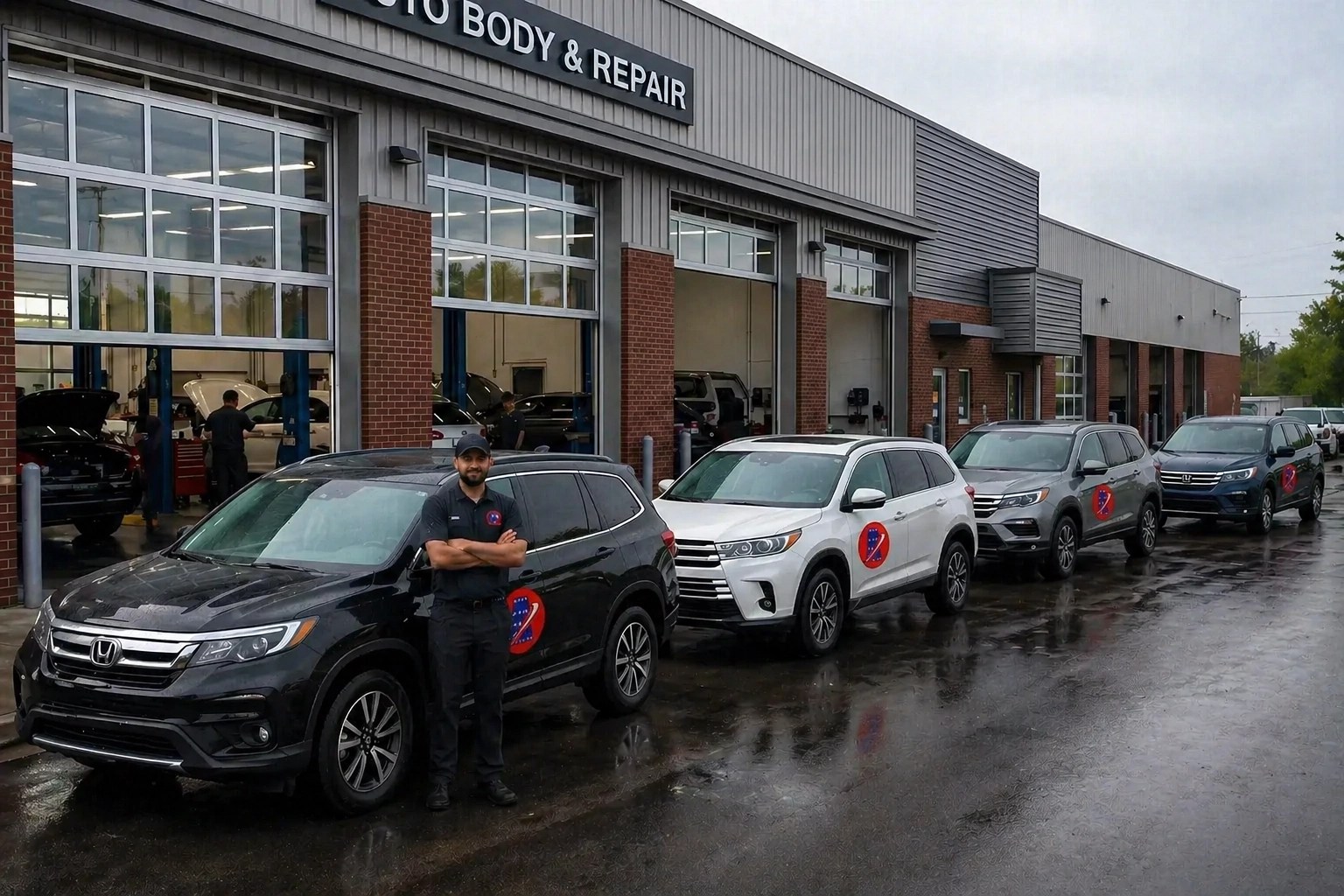
Local body shops are built for collision. They thrive on insurance claims for one-off accidents. They are "Swiss Army Knives." They do paint, they do frames, they do glass. But when a "Cat Event" drops 3,000 damaged vehicles into a single zip code, those shops drown.
They have three PDR (Paintless Dent Repair) sub-contractors on speed dial. Those guys are already booked. The local shop has two paint booths. They have a back office staff of two.
They cannot scale.
When you send a fleet to a local shop after a storm, you aren't "supporting local." You are subsidizing a backlog. You are waiting behind every single retail customer in town.
No priority. Just delays.
01: The Bottleneck Phase
The local shop timeline looks like this:
- Week 1: They "try" to get an appraiser out.
- Week 3: They start the paperwork.
- Month 2: They realize they need parts.
- Month 4: Your cars are still sitting in the back lot, collecting dust and losing value.
At Amaryllis Hail Repair, we don't wait for the backlog. We bypass it.
Reparación de Granizo: Expertise Matters
For our partners in Texas and Florida, the language of the storm is universal. Reparación de granizo experta. You need a team that speaks the language of catastrophe.
In regions like South Texas, the local infrastructure is often the first thing to fail after a massive storm. When the local shops are overwhelmed, they stop answering the phone.
We don't.
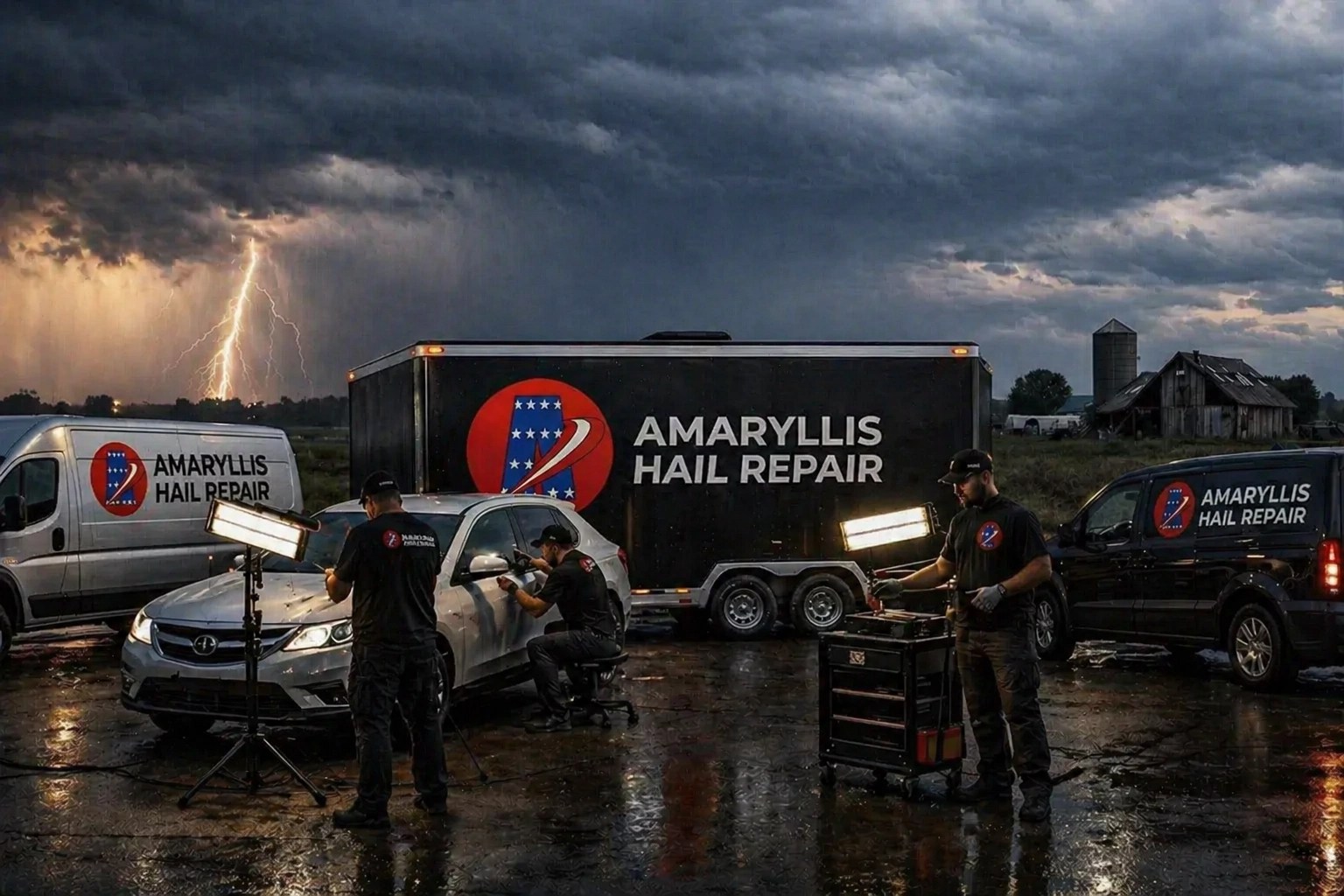
We deploy 20-man PDR teams in under 24 hours. We bring the infrastructure to you. We are not a shop; we are a strike team.
02: Scalability is the Only Metric
Fleet managers live and die by the turn. If a vehicle isn't retail-ready, it’s a vibrating pile of debt.
Local shops operate on a "first-in, first-out" basis. They cannot prioritize your 100-unit fleet without alienating their entire local customer base. They won't choose you over the mayor's daughter's dented Camry.
Amaryllis is built for volume.
- 24 Hours: Assessment and logistics plan finalized.
- 48 Hours: Technicians on the ground.
- 72 Hours: Repairs active.
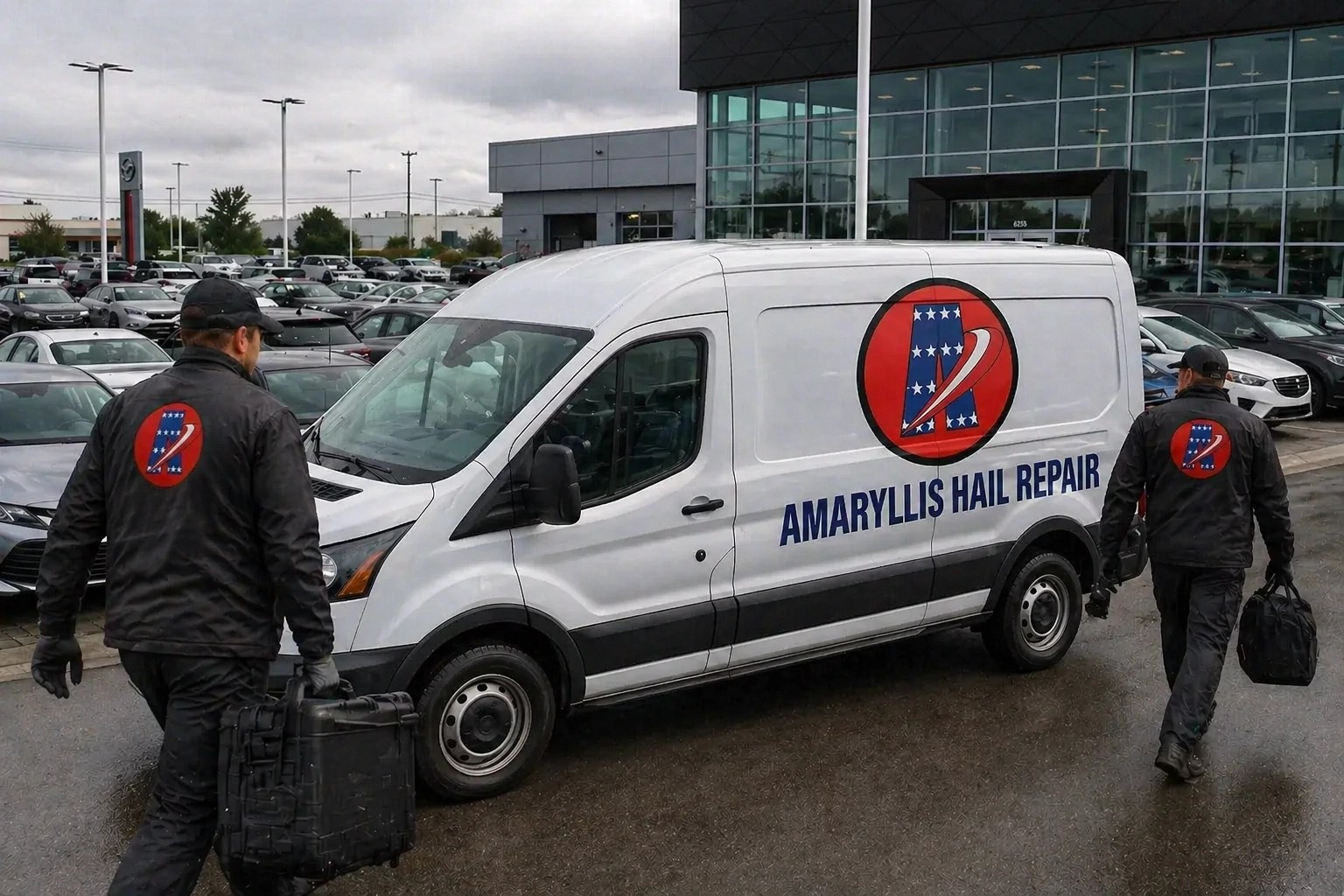
We don’t take up your service bay space. We don’t wait for your lift to open up. We bring mobile operations that run parallel to your business, not through it.
No interference. Just efficiency.
03: The Parts Problem
The biggest lie in the industry is that every dent needs a new panel. Local shops love conventional repairs. Why? Because they can bill for parts, paint, and labor.
But parts are backordered. Panels for new SUVs are sitting on a container ship or stuck in a warehouse 1,000 miles away.
If you go conventional, you wait.
Amaryllis prioritizes Elite PDR. We save the factory finish. We don’t wait for shipping. Our technicians manipulate the metal back to its original state without a single drop of Bondo or a new coat of paint.
Resposta rápida. Fast response. Qualidade garantida. Guaranteed quality. Whether you are managing a fleet in the US or looking for international-standard disaster response, the methodology remains the same: Fix it right, fix it fast, and keep the original paint intact.
Why Nationwide Scalability Wins
When a storm hits, the best technicians in the country move. They don't stay at the local shop in a town of 50,000 people. They join disaster response teams like ours.
We have the "A-Team" of PDR. These are guys who have seen 10,000 cars. They work with a precision that a local generalist tech simply cannot match. They move with speed because they are specialized.
The Economics of the Storm
Let’s talk numbers.
A local shop might save you a few hundred dollars on a "buddy" rate.
But if that car sits for 60 days longer than it should, what did you actually save?
- Floorplan Interest: Mounting every day.
- Depreciation: The car is getting older every second it sits with a dent.
- Opportunity Cost: That’s a spot on your lot that could be occupied by a sellable unit.
Loss of momentum is the real cost of a local shop.
Disaster Response vs. "Repair"
There is a difference between a repair and a response.
A repair is what you do when you have time.
A response is what you do when your revenue is under threat.
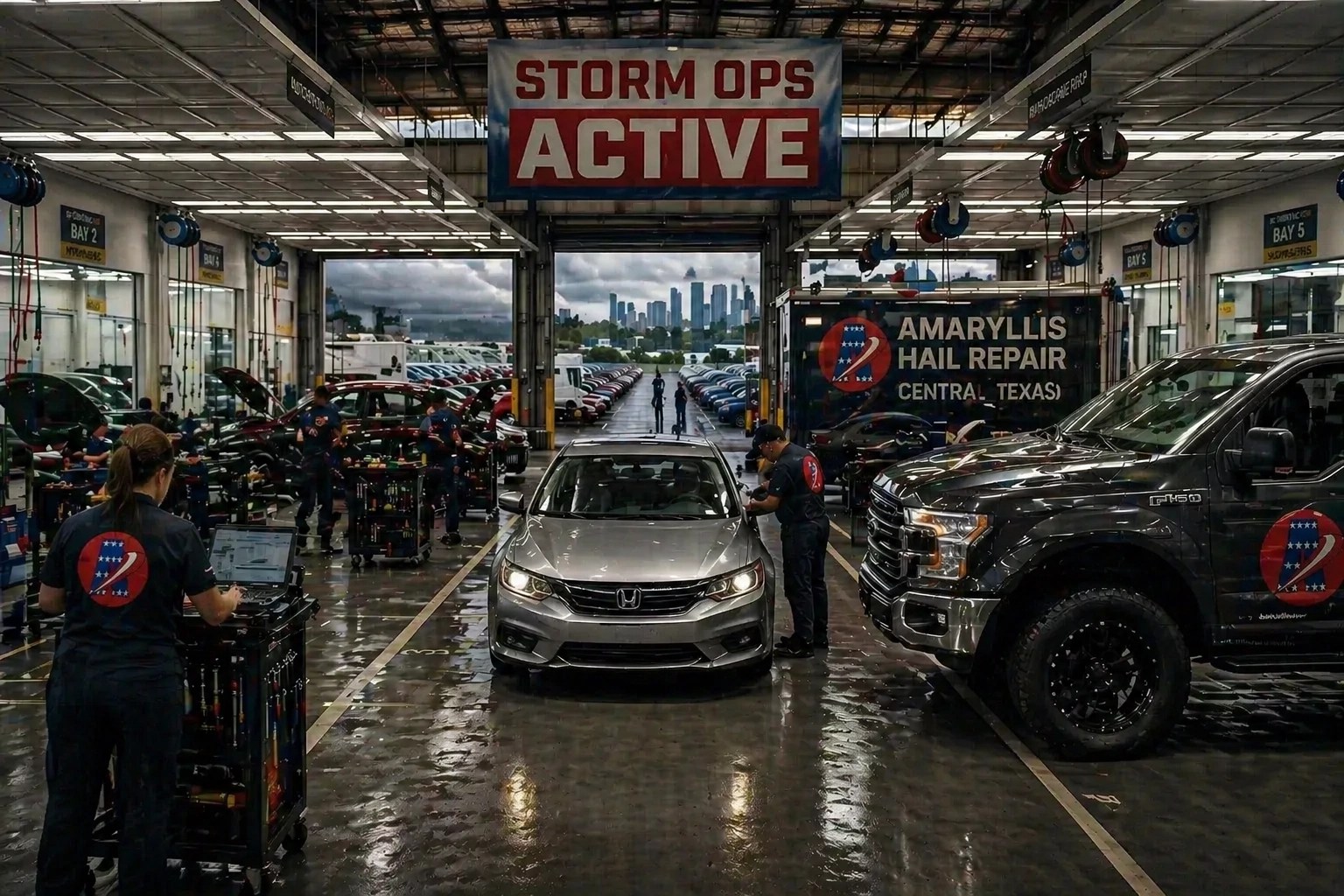
Amaryllis Hail Repair is a disaster response company. We treat a hailstorm like a surgical strike. We arrive, we stabilize the inventory, we execute the repairs, and we exit.
The Truth for the Fleet Manager
You are responsible for the assets. The assets are currently broken.
If you choose the local shop, you are choosing a person.
If you choose Amaryllis, you are choosing a process.
People get tired. People get overwhelmed. People make mistakes when they are understaffed.
A process scales. A process repeats. A process delivers 100% retail-ready vehicles on a predictable timeline.
No guesswork. Just data.
Final Verdict
If you have one car with one dent, go to the local shop. Support the community. Grab a coffee while you wait.
If you have a fleet and a storm just wiped out your inventory, call the professionals.
Stop thinking local. Start thinking scalable.
The storm didn’t care about your relationship with the guy down the street. It hit everyone. Everyone is in line.
Get out of the line. Call Amaryllis.
Reparación de granizo sin pintura.
Paintless Dent Repair at scale.
No backlog. Just results.
Leave a Reply