

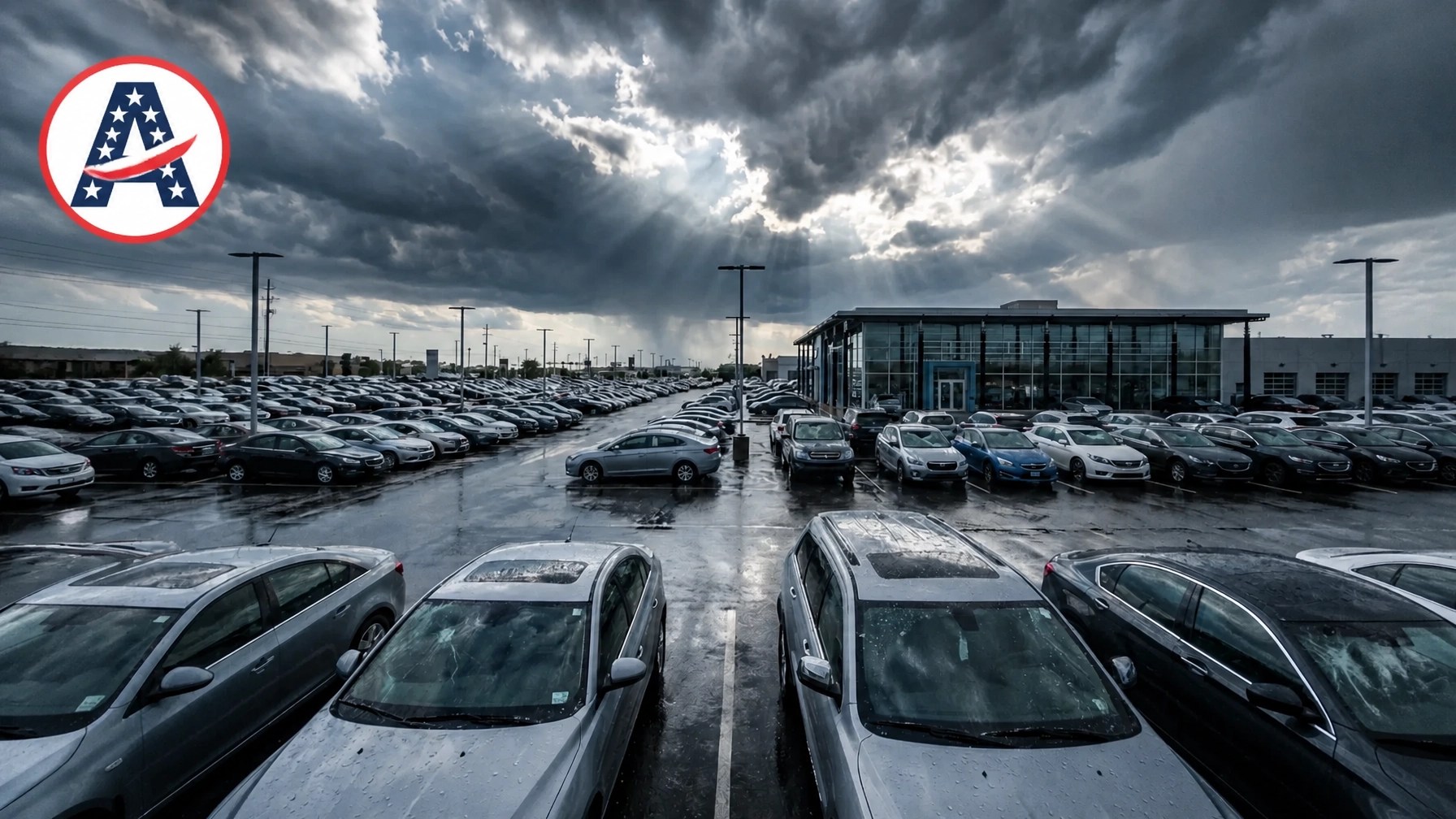
Storms don’t wait for your team to be ready. They hit. They destroy. They move on. You’re left with the bill and a lot of dented inventory.
No preparation. Just chaos.
Strategic planning. Just results.
Automotive catastrophe response isn’t a suggestion. It’s a requirement for survival. If you manage a dealership or a fleet, the storm is your biggest liability. Your goal is simple: Reduce downtime. Maximize recovery.
Here are 20 strategy ideas to build your response plan before the clouds turn gray.

Phase 01: The Operational Foundation
01. Implement a Four-Component Framework
Build your strategy on four pillars: Operational Execution, Transportation Logistics, Real Estate Capacity, and Vehicle Merchandising. If one pillar fails, the whole response collapses.
02. The Disaster Response Playbook
Stop guessing. Write it down. Your playbook must outline every vendor, every contact, and every protocol. When the power goes out, the plan stays on. No confusion. Just execution.
03. Designate Crisis Decision-Makers
Too many cooks kill the recovery. Assign one person to lead fuel. One for logistics. One for catastrophe hail repair teams coordination. Give them authority. Let them work.
04. Real-Time Communication Protocols
Email is slow. Phones fail. Establish a redundant communication chain. Use satellite-enabled tech if you have to. Everyone needs to know their role in the first 60 minutes.
05. Cross-Train Your Core Staff
What if your logistics lead can’t make it to the facility? Your team must be interchangeable. Cross-train on fuel procurement and intake processes. Redundancy is resilience. Preparación es poder.
Phase 02: Logistics and Asset Readiness
06. AI-Driven Route Optimization
The roads will be blocked. Debris. Flooding. Abandoned cars. Use AI-driven tools to map the fastest, safest routes for your recovery vehicles.
07. Multi-Vendor Fuel Partnerships
Local gas stations will run dry. Establish contracts with at least three different fuel suppliers. Include direct-to-truck fueling services. No fuel. No movement.
08. 72-Hour Emergency Reserves
Stock enough fuel to run your fleet for three full days. Do not rely on the grid. If the pumps are down, you are the only one moving. Agilidade é tudo.
09. Deployment of Multi-Functional Vehicles
Your response vehicles shouldn’t just move cars. They should be mobile workshops. Modular designs allow you to switch from assessment units to repair support in minutes.
10. Pre-Stocking Operations
Don't wait for the storm to buy supplies. Keep specialized PDR tools, lights, and intake forms ready in a mobile operations unit.
Phase 03: High-Tech Hail Damage Assessment
11. GPS and Telematics Integration
You need to see your fleet in real-time. Deploy GPS tracking on every recovery vehicle. Coordinate relief efforts with precision. No lost assets. Just data.
12. Mobile Solution for Assessment and Reporting (MSAR)
Paper is the enemy. Use mobile assessment tools to document hail damage instantly. Upload photos. Generate repair orders. Sync with insurance adjusters on the fly.
13. Traffic Response Management Systems
Integrate with regional eSTORM systems. Monitor road closures and evacuation routes. Speed is the metric that matters. Every minute saved is a dollar earned.
14. Connected Vehicle (V2I) Alerts
If your fleet supports Vehicle-to-Infrastructure tech, use it. Receive real-time weather alerts and road condition updates directly in the cockpit.
15. Interactive Command Dashboards
You can't manage what you can't see. Build a dashboard that tracks storm movement against your vehicle locations. Predictive modeling saves inventory.
Phase 04: Scaling the Human Element
16. Conduct Regular Emergency Drills
A plan is a piece of paper until it’s tested. Run quarterly drills. Simulate a catastrophic hail event. Watch for the bottlenecks. Fix them before the real storm does it for you.
17. Strategic Scenario Planning
Prepare for the worst. What if 500 cars are hit? What if the building is damaged? Map out the fleet coordination for every severity level.
18. EV Preparedness and Continuity
Electric vehicles present unique challenges. Plan for mobile charging stations. Ensure your catastrophe hail repair teams know how to handle high-voltage systems safely.
19. Insurance Documentation and Risk Mitigation
Have your insurance requirements ready. Document pre-storm asset conditions. High-resolution photos. Time stamps. Resposta rápida.
20. Supply Chain Contingencies
Parts will be backordered. Establish priority sourcing for glass and moldings. Maintain a "storm-kit" of high-failure parts to prevent repair stalls.
Scaling for Impact: Catastrophe Hail Repair Teams
When a massive storm hits, your local shop won't cut it. You need scale. You need catastrophe hail repair teams that can deploy in 24 hours.
These teams don't just fix dents. They manage the entire flow.
No backlogs. Just restoration.
Amaryllis Hail Repair specializes in this rapid-response model. We don't wait for the phones to ring. We monitor the radar. When your lot gets hit, we are already moving. Our technicians are the elite of the PDR world. They handle high-volume, retail-ready restoration without the need for paint or body filler.
The Science of Hail Damage Assessment
A quick glance at a car isn't an assessment. It's a guess.
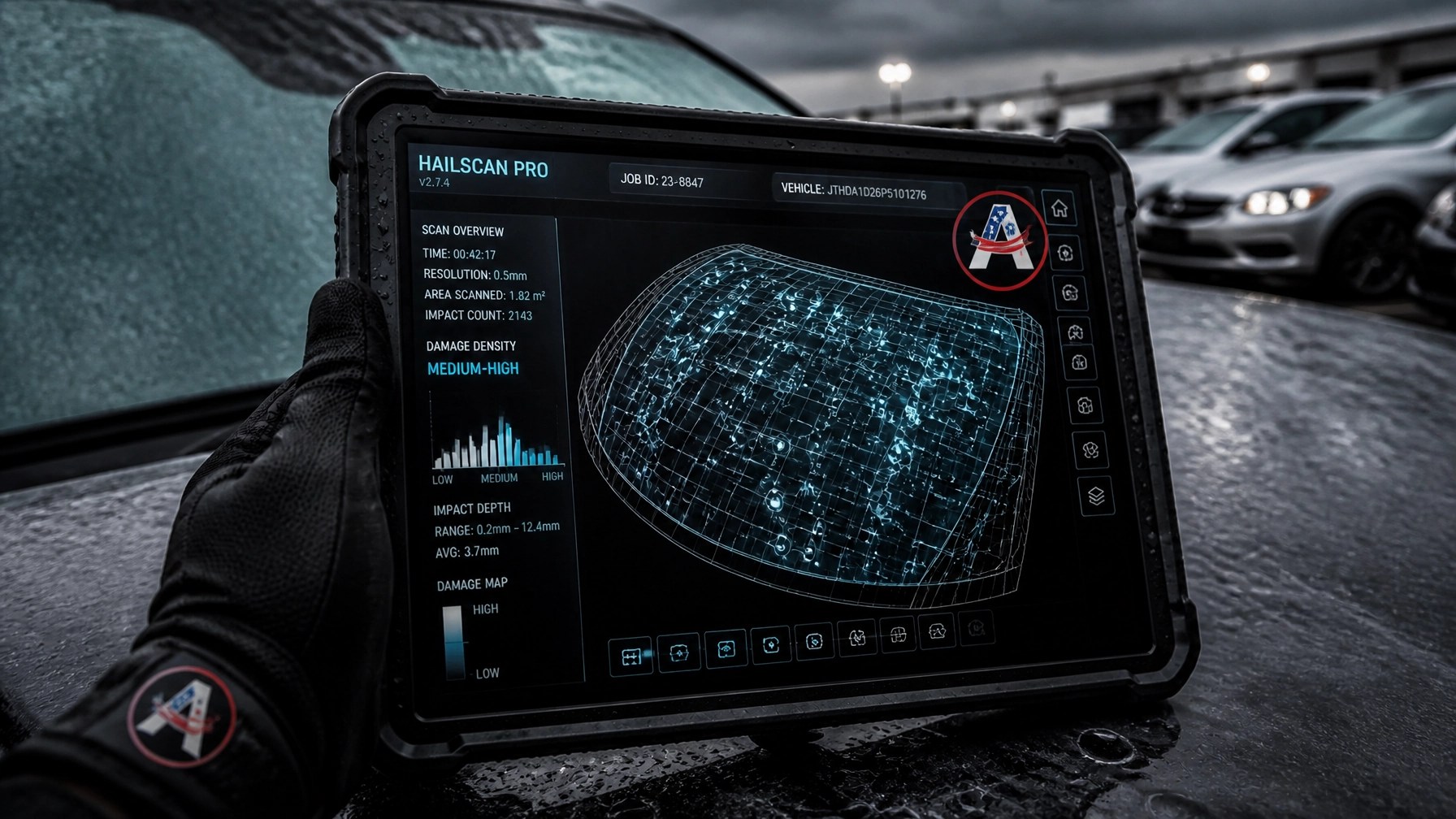
Professional hail damage assessment requires specialized lighting and high-definition scanning.
We identify the microscopic fractures in the clear coat. We map every impact point. This data ensures your insurance claim is accurate. It ensures the structural integrity of the vehicle is maintained.
No missed damage. Just total recovery.
Why Speed Matters
Studies show that improving response speed by just 5% can reduce overall delays by nearly 30%. In the automotive world, delay equals depreciation. A car sitting on your lot with hail damage is a car that isn't selling. It’s a car that’s losing value every day it sits in the "to-be-fixed" pile.
We focus on the 24-hour window.
Assessment. Approval. Action.
Our Identity
At Amaryllis Hail Repair, we operate with a specific set of values. We are direct. We are fast. We are American-led. We don't do corporate fluff. We do PDR at scale.

Summary of the 24-Hour Blitz
If you follow these 20 strategies, your first 24 hours after a storm will look like this:
- Hour 01: Crisis decision-makers activate the playbook. Communication lines open.
- Hour 04: Mobile assessment tools begin mapping the lot. Initial damage reports are generated.
- Hour 08: Catastrophe hail repair teams arrive on-site. Logistics units set up mobile bays.
- Hour 12: First batch of vehicles is approved for repair. Intake processes move to the repair phase.
- Hour 24: Repair operations are in full swing. The first units are restored to retail-ready condition.
No excuses. Just performance.

Final Thought for Fleet Managers
Don't wait for the clouds. The time to build your network is now. The time to vet your catastrophe hail repair teams is today.
When the storm hits, you want to be the one moving while your competitors are still filing paperwork.
Check your fuel. Test your tech. Train your people.
No disaster. Just a challenge met.
No loss. Just a managed recovery.
Amaryllis Hail Repair.
Nationwide. Rapid. Professional.
Leave a Reply