

A storm hits. The lot is a mess. Hundreds of units are peppered with hail.
You need them back on the line. You need them retail-ready.
But "retail-ready" is a term people throw around. Most of the time, it's a lie.
To the naked eye, a panel looks flat. In the shadow of a service bay, it looks fixed. Then the sun hits it at a 45-degree angle. Or worse, a customer sees it under the bright LED floodlights of your showroom.
The waves appear. The "high spots" scream. The texture is off.
Metal doesn't lie.
At Amaryllis Hail Repair, we don't guess. We use the light.
The Tool: The PDR Light Board
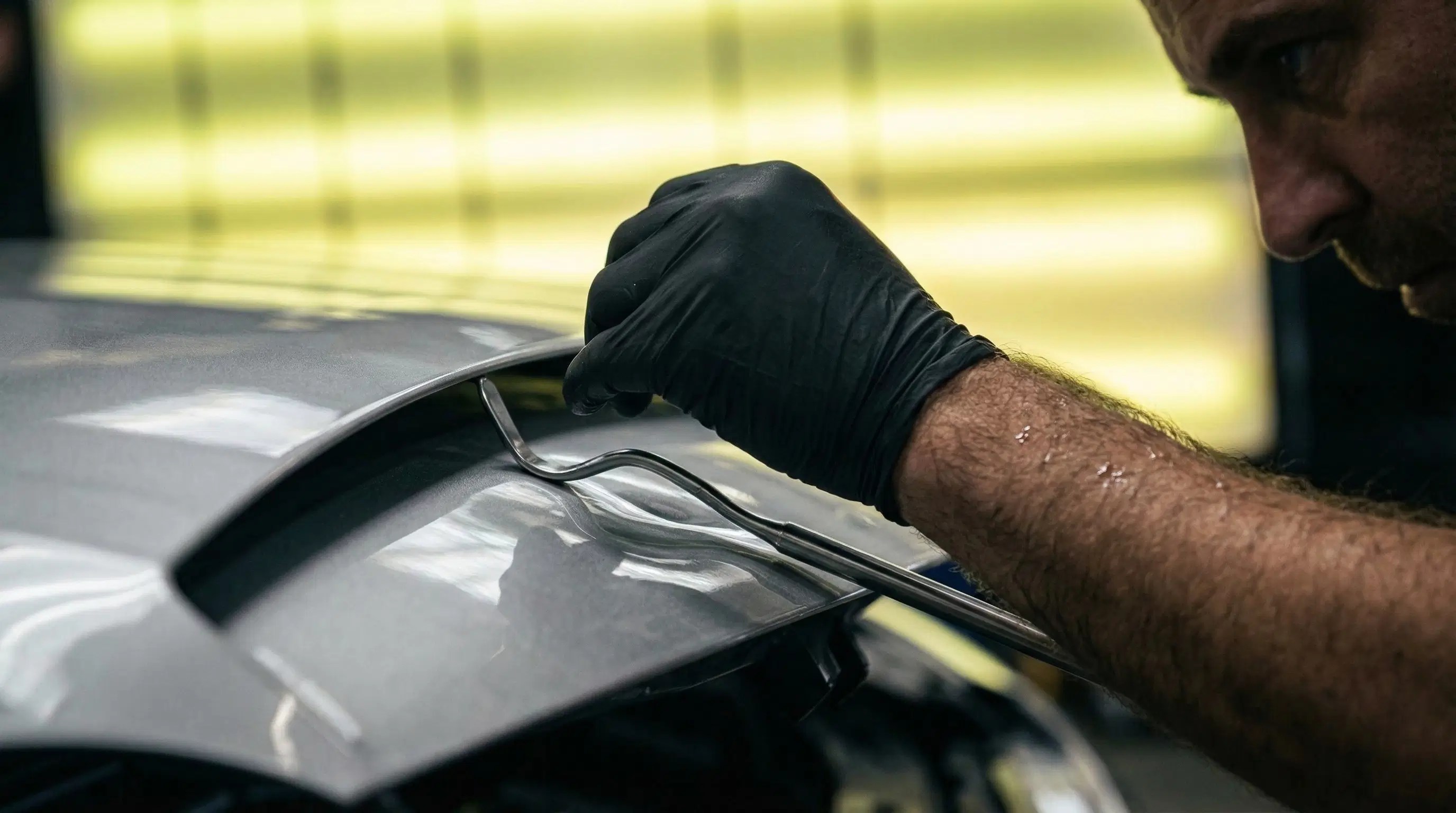
Professional Paintless Dent Repair (PDR) isn't about looking at the dent. It's about looking at the reflection.
If you don't have a high-resolution LED light board, you aren't doing professional PDR. You're just pushing metal.
The Technical Reality:
01 Fine Line Patterns. We use boards with 3mm line widths. 3mm gaps. This creates a tight grid. Even a micro-imperfection disturbs the lines. If the lines aren't parallel, the dent isn't gone.
02 Color Temperature. Natural white. Amber. Yellow. We switch colors based on the paint. Yellow light on a red panel reveals depth. White light on black reveals texture.
03 Uniform Fade. No hot spots. Just a consistent gradient. This allows the technician to see the "orange peel" of the factory paint.
No light board. No precision. No retail-ready.
El Estándar: "Retail-Ready" en Texas y Más Allá
Para los concesionarios en Texas y Florida, la calidad no es opcional. Un cliente nota una reparación mediocre bajo el sol intenso.
No aceptamos "suficientemente bueno". Solo aceptamos la perfección.
Nuestros técnicos de élite utilizan tableros de luz LED para asegurar que la textura del metal coincida con el acabado de fábrica. Si la reflexión se distorsiona, el trabajo no ha terminado.
The "Orange Peel" Problem
Every car has a texture. It’s called orange peel. It’s the natural variation in the clear coat.
Amateurs sand it down. They "over-push." They leave the metal smoother than the rest of the car.
That’s a fail.
A retail-ready repair preserves the orange peel. The reflection must look identical to the undamaged sections of the panel.
The Amaryllis Process: 01 to 05
We don't just send guys with tools. We send a system.
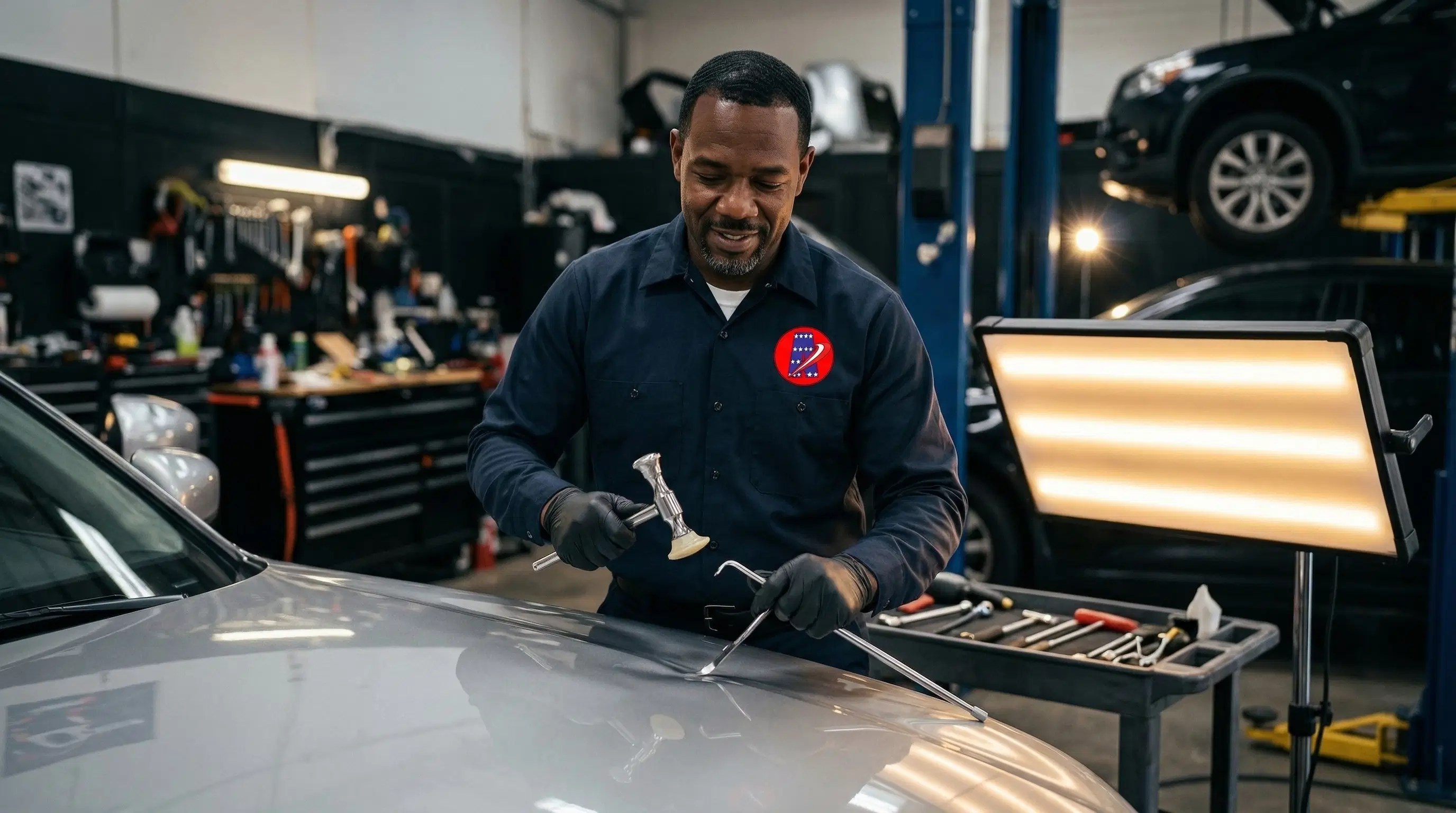
01 Send Photos. Show us the damage. 3-5 shots. We see the depth. We see the metal memory.
02 Confirm Terms. We move fast. No red tape.
03 Deployment. We arrive in 24 hours. Nationwide.
04 The 5-Car Trial. This is where we prove it. We fix five cars. You put them under your own lights. You check the lines. You check the texture. If you aren't satisfied, we pack up.
05 Full Operation. Approval met. We scale. 1 tech or 25+.
No [Excuses]. Just [Results].
Verdade no Metal: Qualidade para Grandes Operações
Para nossos parceiros e técnicos que falam português, a mensagem é simples: a luz revela a verdade.
Não escondemos o trabalho. Nós o expomos.
Nossos técnicos são treinados para ler o reflexo. Cada movimento da ferramenta é guiado pela luz. Isso é o que separa um "trocador de peças" de um mestre em PDR da Amaryllis.
Why Consistency Matters
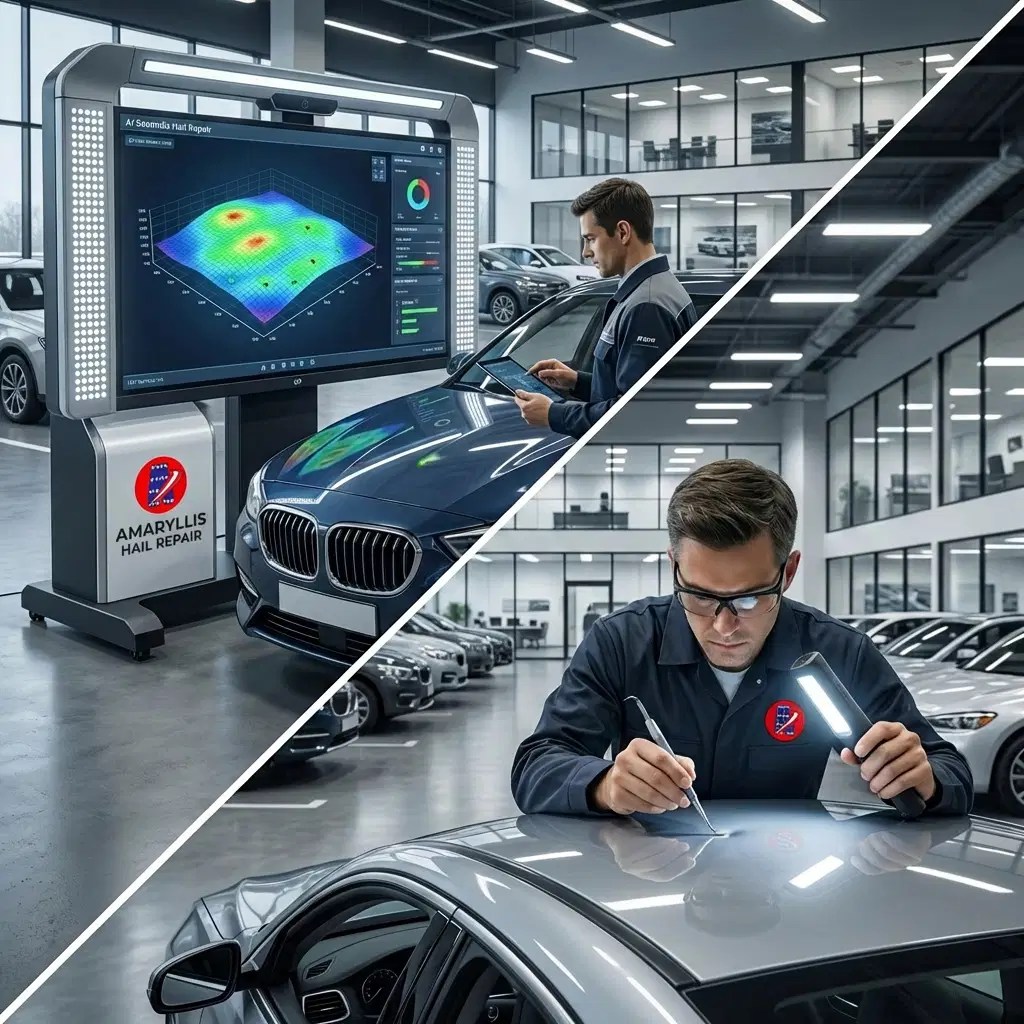
A dealership lot is a sea of reflections. When a row of cars is finished, they should look like they just rolled off the transport truck.
Inconsistent PDR creates "visual noise." It makes the lot look aged. It makes the inventory look repaired.
Our vetting process ensures every tech in our 100+ network understands the light board. They aren't learning on your inventory. They’ve already mastered the craft.
The Cost of "Cheap" PDR
Cheap crews don't use high-end lighting. They use passive reflectors or cheap shop lights.
The result?
- Missed dents.
- Cracked clear coats.
- Inconsistent finish.
- Customer returns.
You save $50 a car on the repair. You lose $5,000 on the trade-in value or the lost sale.
Stop losing money.
Rapid Deployment. Retail-Ready Quality.
Storm season is coming. The backlog is building.
Don't settle for "good enough." Demand the light board test.
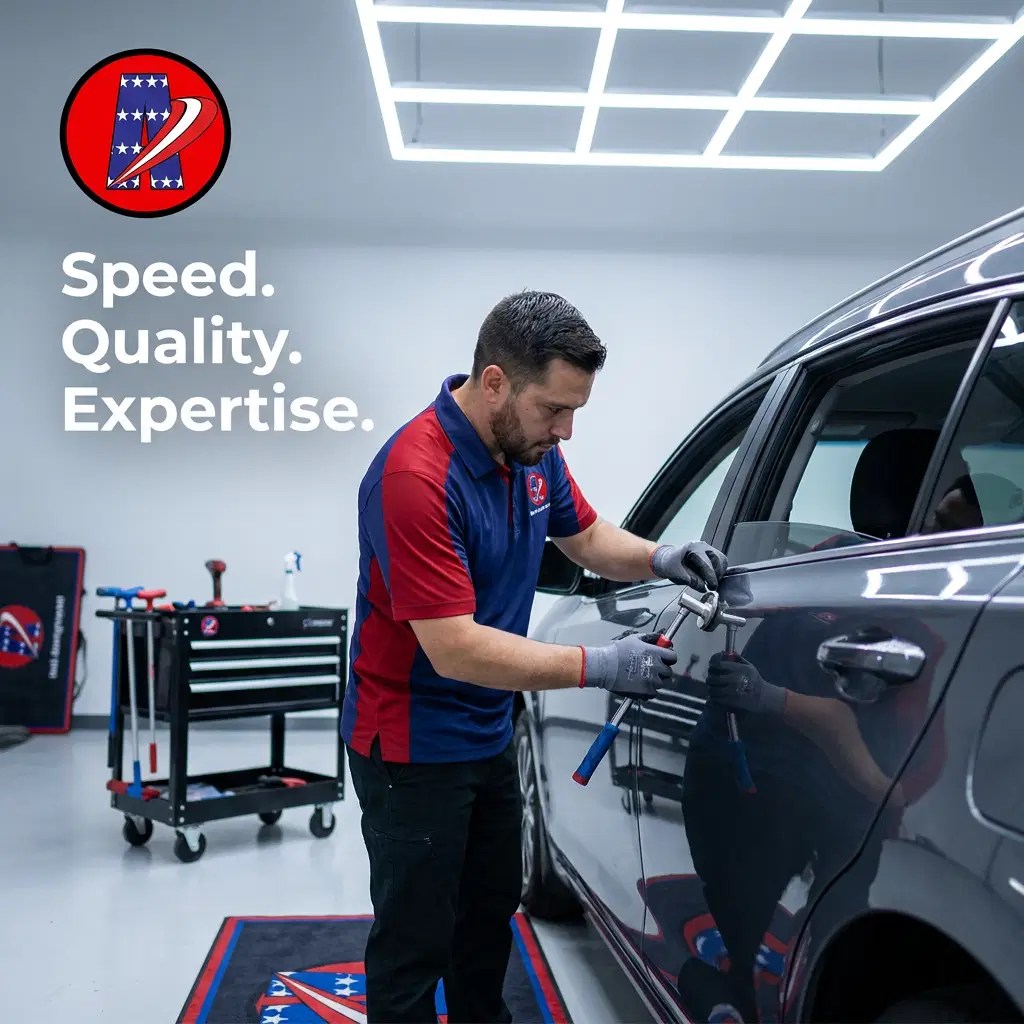
We are ready. 24 hours. Nationwide.
No [Gimmicks]. Just [Metal].
Leave a Reply