
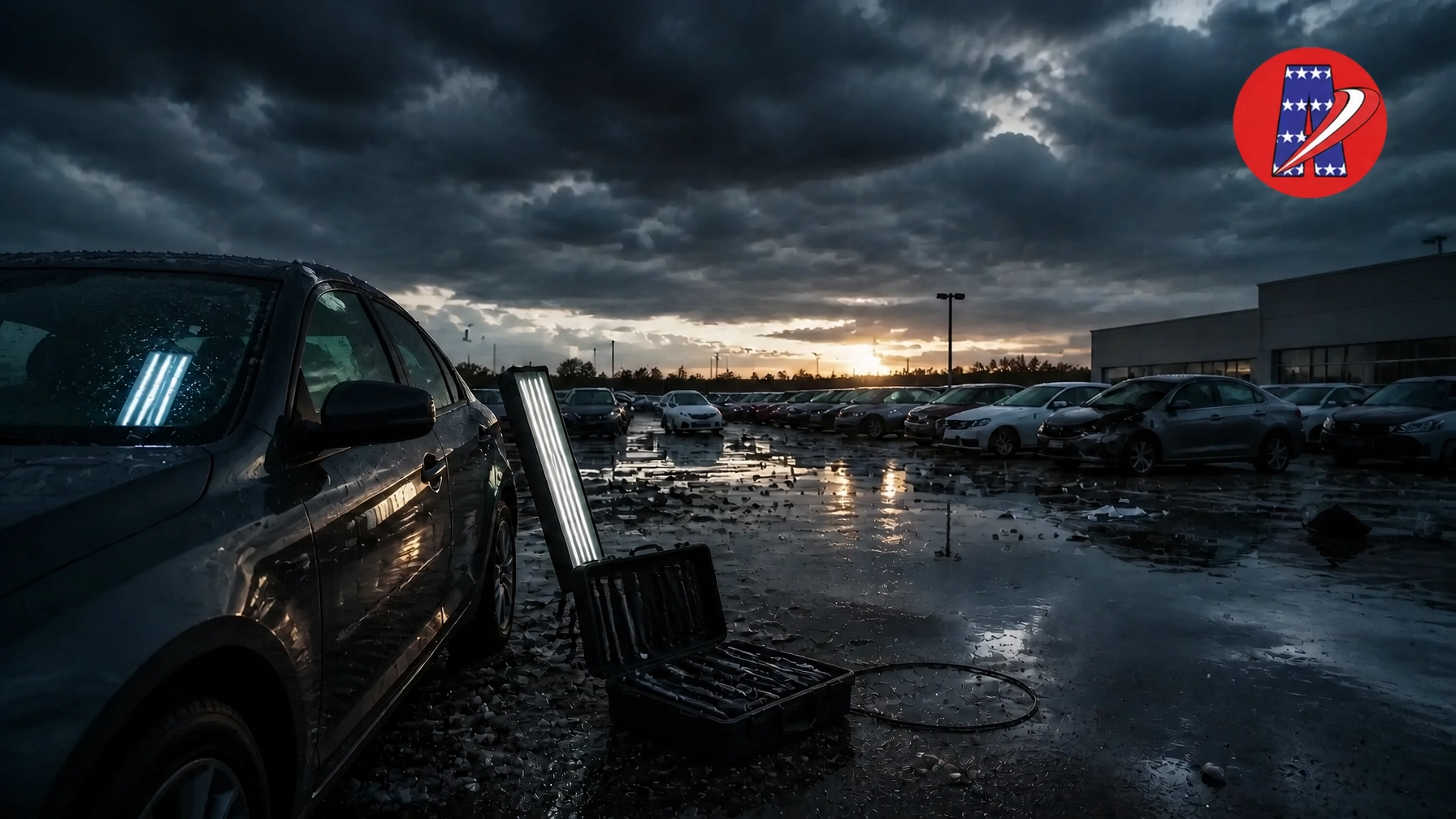
The storm moves fast. The damage moves faster.
A hail cell rips through a ZIP code. Within 12 hours, the phone rings. Within 24 hours, the lot is swarming. You see the white vans. You see the toolboxes. You see the specialized lighting.
But you don’t always see the shortcuts.
In a catastrophe (CAT) event, speed is the only metric that seems to matter. Dealerships need inventory back on the front line. Insurance adjusters need files closed. This pressure creates a vacuum. Into that vacuum step the "storm chasers."
Some are elite. Most are just fast. And in Paintless Dent Repair (PDR), "fast" without "elite" is a recipe for a liability nightmare.
I’ve seen it all. I’ve seen the hacks that save five minutes on a door but cost the dealer five thousand in resale value. This isn't just about dents. It’s about the structural integrity and the OEM finish of your assets.
Here is the truth. These are the confessions of a PDR tech. These are the shortcuts you need to watch for before the "fixed" cars leave your lot.
Phase 01: The Chaos Factor
Fase 01: O fator caos.
When a major hail event hits, the logistics are a nightmare. You have 500 cars on a lot. Every panel is peppered. You need 20 techs, and you need them yesterday.
The "Chaos Factor" is where quality dies. In the rush to secure labor, vetting goes out the window. If they have a tool and a light, they get a car. That’s the first mistake.
Elite PDR is a craft. Shortcut PDR is a crime.
No [Chaos]. Just [Precision].
We don't just "find guys." We deploy a vetted strike team. Our elite technicians are ready within 24 hours. They don't just fix cars. They protect your reputation.
Phase 02: The Shortcuts
Fase 02: Los Atajos.
This is the technical reality. If you aren't looking for these four specific shortcuts, you are missing the damage beneath the surface.
01. The "Drill and Plug" Disaster
This is the oldest, dirtiest trick in the book. A tech wants to reach a dent on a door skin or a roof rail. The proper way? Remove and Install (R&I). You drop the headliner. You pull the door panel. It takes time.
The shortcut? They take a cordless drill. They punch a 1/2-inch hole in the door jamb or the pillar. They push the dent through the hole. They pop in a plastic plug.
The Risk:
- Rust: You just destroyed the factory E-coat. Bare metal is exposed. In 18 months, that hole is a rust ring.
- Safety: Modern pillars are structural. You don't drill into high-strength steel.
- Resale: A plastic plug is a neon sign that says "cheap repair."
02. The "Cracked Paint" Cover-up
Hail doesn't just dent metal. It shocks paint. If the impact was sharp enough, the clear coat is already micro-fractured.
An elite tech will identify this immediately. They will tell you: This panel needs a body shop.
A shortcut tech will push it anyway. They will use heat to soften the paint and massage it until it "looks" flat. But the fracture is still there. Six months later, under the sun, that clear coat starts to peel.
The Risk: The customer buys the car. Three months later, they are back at your service desk with a peeling hood. You just lost a customer for life.
03. The "Glue Pull" Pitfall
Glue pulling is essential for roofs and rails where access is limited. It involves gluing a plastic tab to the dent and pulling it out with a slide hammer.
It requires patience. It requires the right temperature.
The shortcut? Rushing the pull. Using too much tension. Pulling when the metal is too cold.
The Risk:
- Pitting: The glue bond is stronger than the paint bond. The tech "yanks" the tab and takes a dime-sized chunk of clear coat with it.
- Over-pulling: They pull the metal too far out, creating a "high spot" or a "pimple." Then they try to tap it down, leaving a textured, ugly finish that looks like orange peel on steroids.
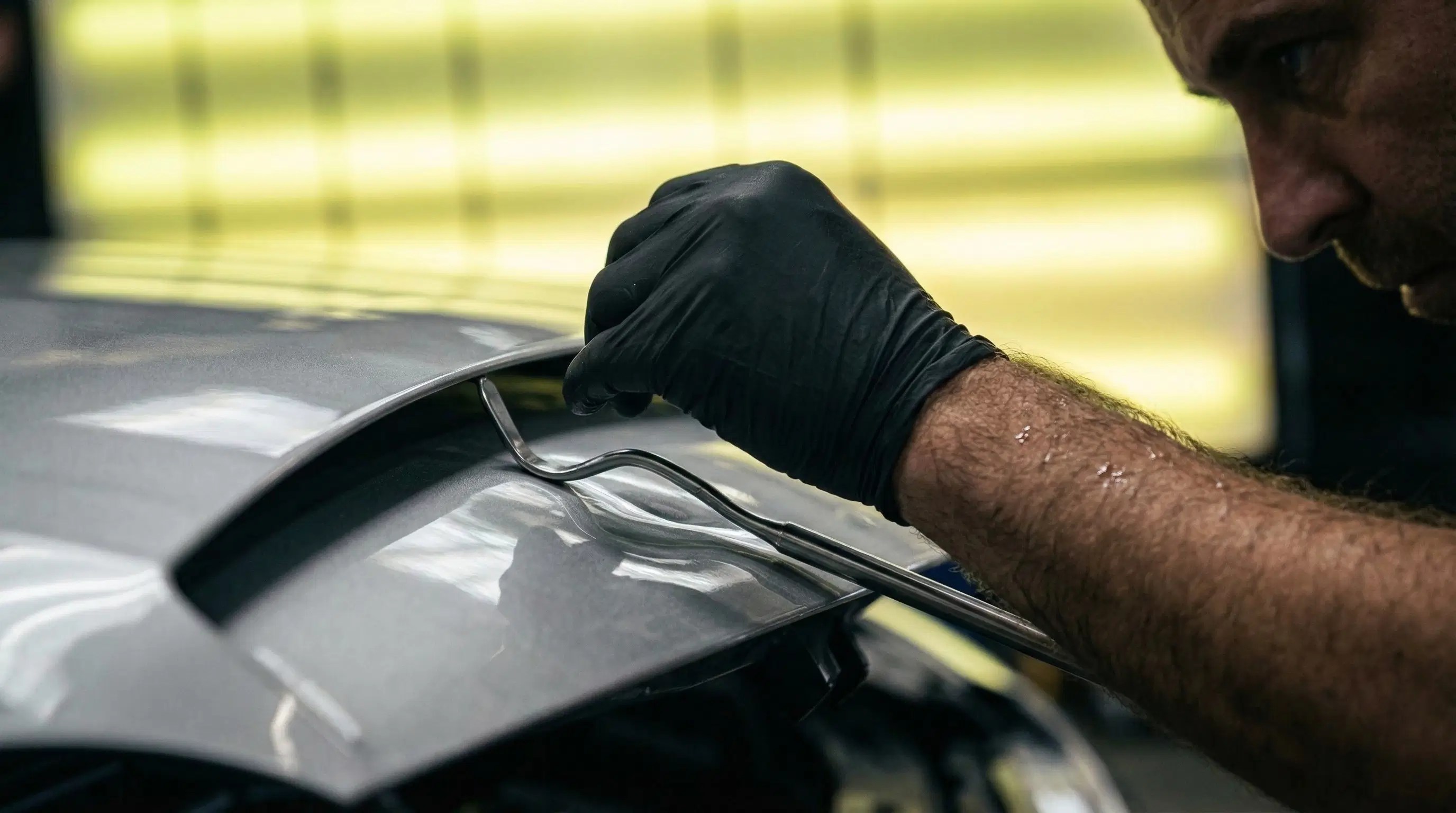
04. The "R&I" Sabotage
R&I (Remove and Install) is where the money is made or lost. To fix a roof properly, you have to drop the headliner. To fix a fender, you might need to pull the liner.
Shortcut techs hate R&I. They will "half-drop" a headliner, creasing the fabric. They will rip out door panels without the right clip tools, snapping the plastic tabs.
The Risk: The car looks fine on the outside. But when the customer drives away, they hear rattles. The sunroof doesn't seal. The side-curtain airbags are obstructed by a poorly reinstalled headliner.
Phase 03: The Amaryllis Guardrails
Fase 03: As salvaguardas da Amaryllis.
We don't hope for quality. We engineer it.
How do you stop the shortcuts? You change the process. We operate on a different frequency than the average storm chasing crew.
01. The 5-Car Trial
We don't ask you to trust us. We show you. Every deployment starts with a 5-car quality trial. You inspect the work under your own lights. You check the R&I. You look for the drill holes. If it isn't retail-ready, we don't move to car number six.
02. Vetted Elite Techs
We have a roster of 100+ techs. These aren't "gig workers." These are specialists we’ve worked with for years. We know their speed. We know their finish.
No [Amateurs]. Just [Experts].
03. Total Integration
We don't just push metal. We integrate with your DMS. We handle the supplements. We talk to the insurance adjusters. We ensure the paperwork is as clean as the panels.

The Verdict: Don't Let the Storm Win Twice
El veredicto: No dejes que la tormenta gane dos veces.
The hail storm is the first disaster. A bad PDR crew is the second.
One damages your inventory. The other damages your brand.
If you are a dealership owner or a body shop manager, you are under fire. You need the cars back. You need them retail-ready. But do not sacrifice the "long game" for a "short fix."
Demand to see the light boards. Ask about their R&I process. Explicitly forbid drilling.
Or, you can just call us.
We deploy within 24 hours. We scale from 1 to 25+ techs instantly. We bring the elite standard to the catastrophe zone.
No [Shortcuts]. Just [Results].
Need a crew on-site now?
Contact Amaryllis Hail Repair
Leave a Reply